Podcasts
How Mineral Nutrition & Humates Boost Your Bottom Line with Jim Hoorman
In this episode of the Strip-Till Farmer podcast, soil health specialist Jim Hoorman gives a preview of his presentation for the 2022 National Strip-Tillage Conference about mineral nutrition and humates.

Making Dollars & Sense Out of Cover Crops
Sponsored by Montag Manufacturing, this episode features Jim Hoorman of Hoorman Soil Health Services, Ohio.
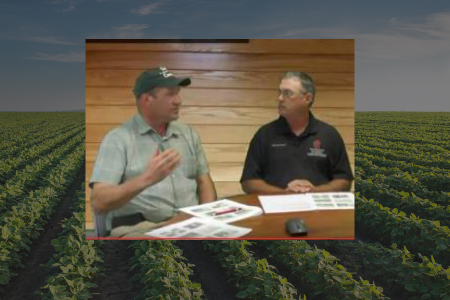
“Soil is meant to be covered” — Jim Hoorman Speaks about Cover Crops
“Each cover crop is designed for a special purpose. Legume cover crops, for instance, are typically used to produce homegrown nitrogen. Grass cover crops are used to increase soil organic matter, recycle excess nutrients, and reduce soil compaction. Brassica covers are grown to loosen the soil, recycle nutrients and suppress weeds and plant pathogens.”
Videos and webinars
Front Fold Crop Roller
See the 30 ft. front fold I&J Crop Roller in action.
Food Plot Crop Roller
I&J Manufacturing makes several Crop Rollers that are used to manage wildlife food plots.
Flip Over Crop Roller
See the I&J Flip Over Crop Roller in action.
Challenger with Crop Roller
Challenger MT665D rolling a cover crop of rye ahead of the soybean planter with an I&J MFG Crop Roller.
A Podcast conducted by Diego Footer
Jim Hoorman discusses soil compaction and ways to improve soil structure. Jim also shows how to look for Boron, Calcium, and Manganese deficiencies on corn leaves and how to solve these issues.
Jim Hoorman — Enhancing Mycorrhizae and Metarhizium Fungus
Mycorrhizae fungi bring back 6X more phosphorus and many other micronutrients than the plant root can by itself. Corn roots can explore only about 1% of the soil volume but with the aid of mycorrhizae, they can explore up to 20% of the soil volume for water and nutrients. Metarhizium fungi kill over 200 insect species but also enhance nitrogen uptake in the plant.
Unlocking the Secrets of the Soil: Compaction
What’s the best way to restore compacted soil? Cover crops. Cover crops and crop roots add soil organic matter and root exudates which improve soil structure.
Unlocking the Secrets of the Soil: Plants Feed the Soil Organisms and Vice Versa
Plant roots use 25 to 45% of their total carbohydrate root reserves to feed soil microbes. The microbes use that energy in the form of sugars to bring back water and soluble nutrients to feed the plant.
Environmental Impacts of Cover Crops — Jim Hoorman
Cover crop roots increase water infiltration, tie up soluble nutrients like nitrogen and phosphorus, and build up soil organic matter. Phosphorus in Lake Erie is causing eutrophication and harmful algal blooms.
Biology of Soil Compaction Webinar, March 2014
This national webinar shows how soil compaction is a biological problem related to a lack of roots in the soil profile and poor soil structure.
South Dakota March 2013: Biology of Soil Compaction
Plant roots form macroaggregates which allow the soil to have more porosity and improve soil structure. Tillage destroys soil structure and turns soil into cement.
ECO Farming: A New Farming System for the 21st Century
Filmed in 2011 at a field day in Mercer County, Ohio. Jim Hoorman, Ray Archuleta, Dave Brandt and Jeff Rasawehr talk about Eternal no-till, Cover crops and Other best management practices.
Virtual Ohio No-Till Event
The Ohio No-till Council taped a webinar on no-till and cover crop topics. Topics: cover crop plots (Cody Beacom), 60-inch corn (Josh Yoder), soil health (Jim Hoorman), and a panel on no-till, cover crops and beginning no-tillers.